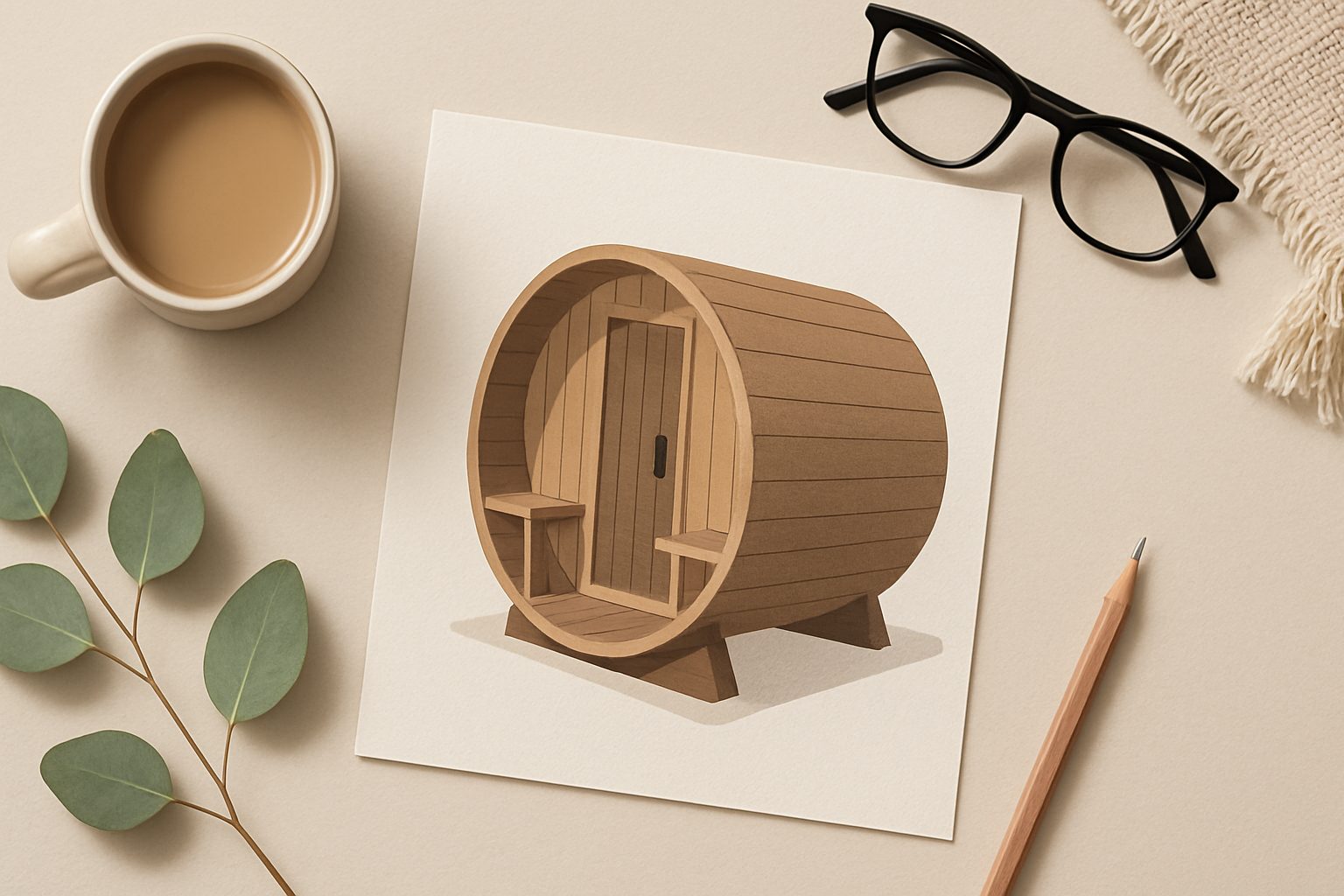
How Long Does a Barrel Sauna Take to Heat Up? UK Wood-Fired vs Electric Compared
If you're considering a barrel sauna for your garden, heat-up time matters. You want to know whether you'll be relaxing in 20 minutes or nursing a tea for an hour. The answer depends heavily on your heater choice and the size of your sauna — and UK weather throws another variable into the mix.
Wood-Fired Barrel Saunas: The Slower Route
A traditional wood-fired barrel sauna typically takes 45 minutes to 90 minutes to reach usable temperature (80°C), depending on the stove's output and your sauna's diameter.
A 6-person barrel (roughly 2.4m long) with a quality cast-iron wood stove usually hits 70°C in about 50 minutes, then another 30–40 minutes to push past 80°C. Smaller 4-person models heat faster — sometimes 40 minutes to usable temperature. Larger 8-person barrels can take over two hours.
The unpredictable part: wood stoves have variable output. A smouldering fire produces far less heat than one with a healthy flame. You're also reliant on wood quality. Wet or unseasoned wood prolongs everything.
Real advantages of accepting this wait time: the ritual is part of the appeal for many people. You're building a fire, tending it, letting the anticipation build. There's no electricity needed. The cost: a basic wood stove runs £300–£600 installed; zero running costs beyond firewood.
Electric Barrel Saunas: The Faster Option
Electric heaters are the convenience choice. A 6–8kW electric stove reaches 70°C in 20–35 minutes, depending on UK grid supply and the stove's exact rating.
Most UK domestic circuits supply 13 amps at 230V, which gives about 3kW — enough to heat a small barrel (4-person) but slowly. A 6-person barrel really wants 6–8kW, which typically requires a dedicated circuit or 16-amp supply. If you can't guarantee that, heat-up stretches to 40–50 minutes even with electric.
Larger electric heaters (8–10kW) exist but need three-phase power or professional installation — less common in residential gardens.
The advantage: reliability and speed. Flip the switch, come back in 25 minutes, and the sauna is ready. No wood to buy, no tending, no smoke. The cost: higher upfront (£1,500–£3,000 installed), plus running costs of roughly £1–£2 per session at UK electricity rates.
Factors That Affect Heat-Up Time
Sauna diameter is the biggest variable. A 2m barrel heats roughly 30% faster than a 2.4m one, and 60% faster than a 3m. Surface area matters: more interior wood = more thermal mass to warm.
Insulation quality silently saves 15–25 minutes across both heater types. Cheap barrel saunas with thin walls or poor roof seals take noticeably longer. Look for saunas with proper rockwool or mineral wool between the inner and outer layers.
Outside temperature slows everything down, especially in winter. A sauna in an unheated garden during a UK November cold snap takes 20–30% longer than the same sauna in summer. Wind makes it worse — it cools the barrel's exterior and steals radiant heat.
Stove positioning within the sauna affects circulation. Stoves mounted lower and toward the back typically distribute heat more evenly than cramped corner installations, shaving off a few minutes.
Initial sauna temperature matters too. A cold, damp barrel in early spring takes longer than one already at 20°C on a sunny autumn day.
What to Expect in UK Weather
During May to September, expect wood-fired barrels to hit 80°C in 60–75 minutes and electric in 20–30 minutes.
October to April shifts both significantly slower. Wood-fired might stretch to 80–100 minutes; electric to 35–50 minutes, especially on damp days.
Cold rain and high humidity (common in the UK) don't stop the heating process, but they do slow it marginally. A wet barrel exterior loses more surface heat, so ambient conditions matter more than the specifications suggest.
The Practical Reality
Most people choose based on frequency and lifestyle, not just heat-up time. If you're using your sauna 2–3 times per week, the speed of electric becomes valuable. If it's once a month on a planned weekend, the 90-minute wait for wood-fired is less painful — you're already committed to an afternoon activity.
Cost considerations swing it further: running costs for electric add up over a year if you're a regular user, though installation is simpler and you avoid buying and storing seasoned wood.
Wood-fired saunas have romance and lower fuel costs, but they demand more discipline: you need to start heating well in advance, and you can't reliably snap decisions to use the sauna on a whim.
Electric saunas fit busier schedules and the UK's variable weather, with the trade-off of higher upfront spend and annual electricity bills.
If speed and convenience matter more than ritual, electric is your answer. Browse our roundup of UK electric barrel saunas to compare models and find the right kW rating for your space.
More options
- Dundalk LeisureCraft Barrel Saunas (Amazon UK)
- Harvia Sauna Heaters and Stoves (Amazon UK)
- Sauna Bucket and Ladle Accessory Sets (Amazon UK)
- Outdoor Sauna Cover and Weather Protection (Amazon UK)
- Barrel Sauna Self-Build Kit (Amazon UK)