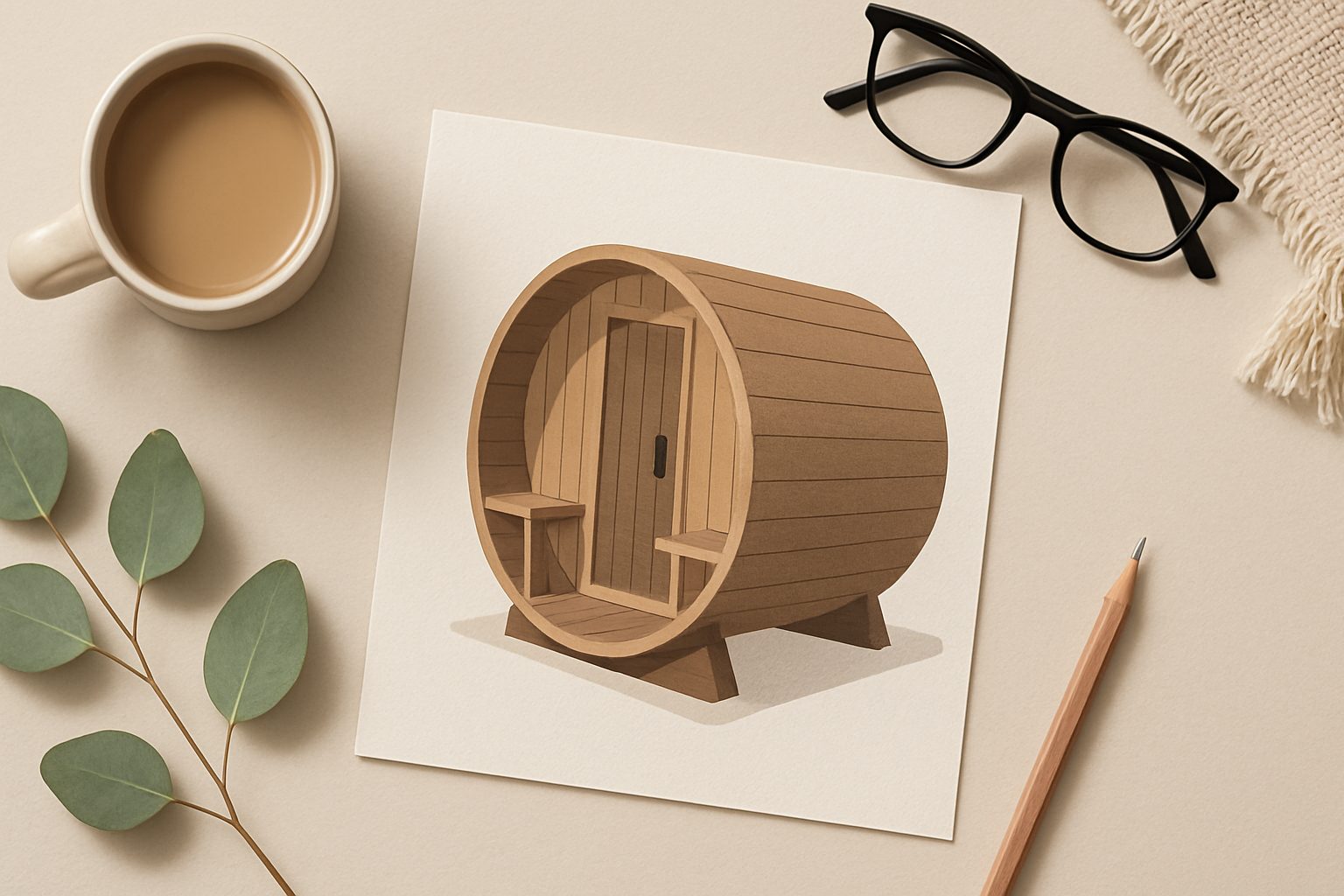
Best Wood-Fired Barrel Saunas UK 2025: Authentic Heat, No Electrician Needed
A wood-fired barrel sauna brings the traditional Scandinavian experience to your garden without requiring planning permission, building control sign-off, or any mains electricity. Unlike hot tubs, which demand ongoing filtration and chemicals, or electric saunas that need specialist installation, these cast-iron stove units sit on a concrete pad, connect to a chimney, and run for pennies per session. If you're drawn to the ritual of stoking a fire and sitting in dry heat—not the steamed wellness theatre of commercial spas—a barrel sauna makes genuine sense for UK homeowners.
The appeal is straightforward: they're self-contained, they heat fast (30–45 minutes to 80°C), and you own the running cost. A session burns roughly a basket of logs, costing far less than a gym membership or salon visit once initial setup is done. This article covers what separates a reliable barrel sauna from an expensive garden ornament: stove construction, chimney design, wood consumption, and which models hold up in damp British weather.
Why Wood-Fired Works in the UK Garden
Electric saunas require a qualified electrician, dedicated circuits, and often 16-20 amp supply work. Wood-fired units dodge that entirely. You light a fire in a sealed stove, the heat radiates into the cedar barrel, and a simple metal flue carries smoke away. Installation is a weekend job: dig and level a spot, lay concrete pads, bolt the sauna down, run the flue up and clear of the roof, and light it. No permits, no inspectors.
The stove itself is the critical component. Cast iron holds heat better than steel and tolerates temperature swings without warping, but costs more upfront. Steel stoves are lighter, cheaper, and heat faster but can corrode or develop hot spots over time, particularly in wet climates. Many barrel saunas sold in the UK sit idle 80% of the year; a thinner steel unit may show rust inside the firebox after two winters of seasonal use.
Stove Quality and Material Differences
Cast iron stoves are the gold standard. They're typically 4–6 mm thick, radiate heat evenly, and last 20+ years with basic maintenance. The trade-off is weight (60–80 kg) and slow warm-up; they require a longer preheating period but hold temperature superbly once hot. If you plan weekly use and aren't in a rush, cast iron justifies the extra £300–500.
Steel stoves (2–3 mm) are common in budget barrel-sauna packages. They heat in 20–30 minutes and weigh half as much, making installation easier. However, they're prone to surface rust if not painted or treated annually, and poor ventilation inside the firebox can create dead zones where heat pools unevenly. Steel stoves rarely see out a decade of casual UK use without repairs.
Some UK importers now offer a middle ground: welded steel with internal cast-iron baffles. These combine quicker warm-up with better heat distribution and cost £600–900. They're a pragmatic choice if you want reliability without the weight penalty of pure cast iron.
Chimney Systems and Installation Reality
A proper chimney is non-negotiable. Many cheap kits include a thin single-skin flue pipe—which rust within two seasons in UK damp. Insulated double-skin flue (or "twin-wall") is mandatory. A basic chimney kit (flue, roof collar, rain cap) runs £200–400 and takes a day to install if you're comfortable on a roof. Cutting the exit hole is the only point where you need a drill and a 150 mm hole saw.
Height matters: your flue should exit at least 600 mm above the roofline to avoid downdrafts. Horizontal offsets should be minimal; every 45° bend loses draft efficiency. If your sauna sits 10 metres from the house, running a 3–4 metre flue vertically will feel effortless. If you need to weave around gutter work, expect to buy extra fittings and lose some draw.
Creosote buildup is a genuine maintenance task. Wood fires produce a tarry condensate that lines the flue. Clean once a year, ideally in spring before storage, using a chimney brush kit (£20–40). A blocked flue means no draft and a smoke-filled session—annoying, not dangerous, but worth noting.
Log Consumption and Running Costs
A typical session uses 10–15 kg of logs, which costs roughly £2–3 if you split hardwood yourself, or £5–8 if you buy bagged kiln-dried birch or oak. Soft woods (pine, spruce) burn faster and create more creosote; hardwoods (ash, oak, birch) burn slower and hotter. Buy logs on the cheap by ordering a cubic metre of logs locally (around £80–120) rather than bagged premium brands. Air-dry for six months; use only seasoned wood (moisture below 20%) or you'll spend your session nursing a smouldering fire.
If you're heating through a Scottish winter, expect to use more wood early in the season when the ambient temperature is cold—the sauna takes longer to reach temperature. A summer session in June is nearly free. A January session might burn twice as much.
Practical Use and Maintenance
Cedar barrels last 10–15 years with weatherproofing. Paint or stain the exterior every 2–3 years; skip interior treatment—the heat and moisture keep the wood supple. Metal bands can loosen from expansion and contraction; check them before each season and tighten with a spanner.
Ventilation is overlooked: you need a floor vent (usually a 10×10 cm opening under the sauna) and a ceiling vent to regulate airflow. Without this, humidity builds and the wood deteriorates faster. Most quality units have these built in.
Let the sauna cool before closing the stove door; a 10-minute cool-down prevents thermal shock. Store outside, elevated off the ground on treated timber blocks to allow air circulation underneath.
What to Check Before Buying
Avoid websites with suspiciously generic product shots or no visible address. Legitimate UK sauna suppliers list their location and offer after-sales support. Request photos of the stove interior; you're looking for even thickness and no obvious casting flaws. Ask about flue gauge (should be 0.6 mm–0.8 mm minimum for double-skin).
Check the weight specification. If it's under 50 kg and described as "heavy-duty," it's likely thin steel. If it's 70+ kg, you're getting cast iron or well-built steel.
Warranty terms vary widely: some offer five years, others 12 months. A longer warranty reflects confidence in the materials.
Final Word
A wood-fired barrel sauna is low-fuss once installed and rewards regular use. The ritual of lighting a fire, waiting for the heat to build, and sitting in clean dry warmth is genuinely restorative—not because of far-infrared myths, but because it's simple and self-contained. Cast-iron stoves cost more but last decades. Steel works fine if you're willing to inspect and maintain annually. Buy locally if possible; a sauna sitting in a shipping container for six weeks can arrive with rust already started inside the stove.
More options
- Dundalk LeisureCraft Barrel Saunas (Amazon UK)
- Harvia Sauna Heaters and Stoves (Amazon UK)
- Sauna Bucket and Ladle Accessory Sets (Amazon UK)
- Outdoor Sauna Cover and Weather Protection (Amazon UK)
- Barrel Sauna Self-Build Kit (Amazon UK)